
Why an anaesthetist started an aesthetics clinic
The personal journey, the clinical conviction, and the unexpected joy of building a practice that balances precision with creativity.
TL;DR Origin Aesthetics grew from my work as a specialist anaesthetist, where precision, anatomy, calm communication, and procedural care are part of everyday practice. Years of ophthalmic and regional anaesthesia shaped the way I approach cosmetic medicine: carefully, thoughtfully, and with deep respect for the person behind the face. My aim is to offer Hawke's Bay a doctor-led, safety-conscious aesthetics practice where patients can ask questions, feel informed, and receive treatment that is subtle, considered, and medically grounded.
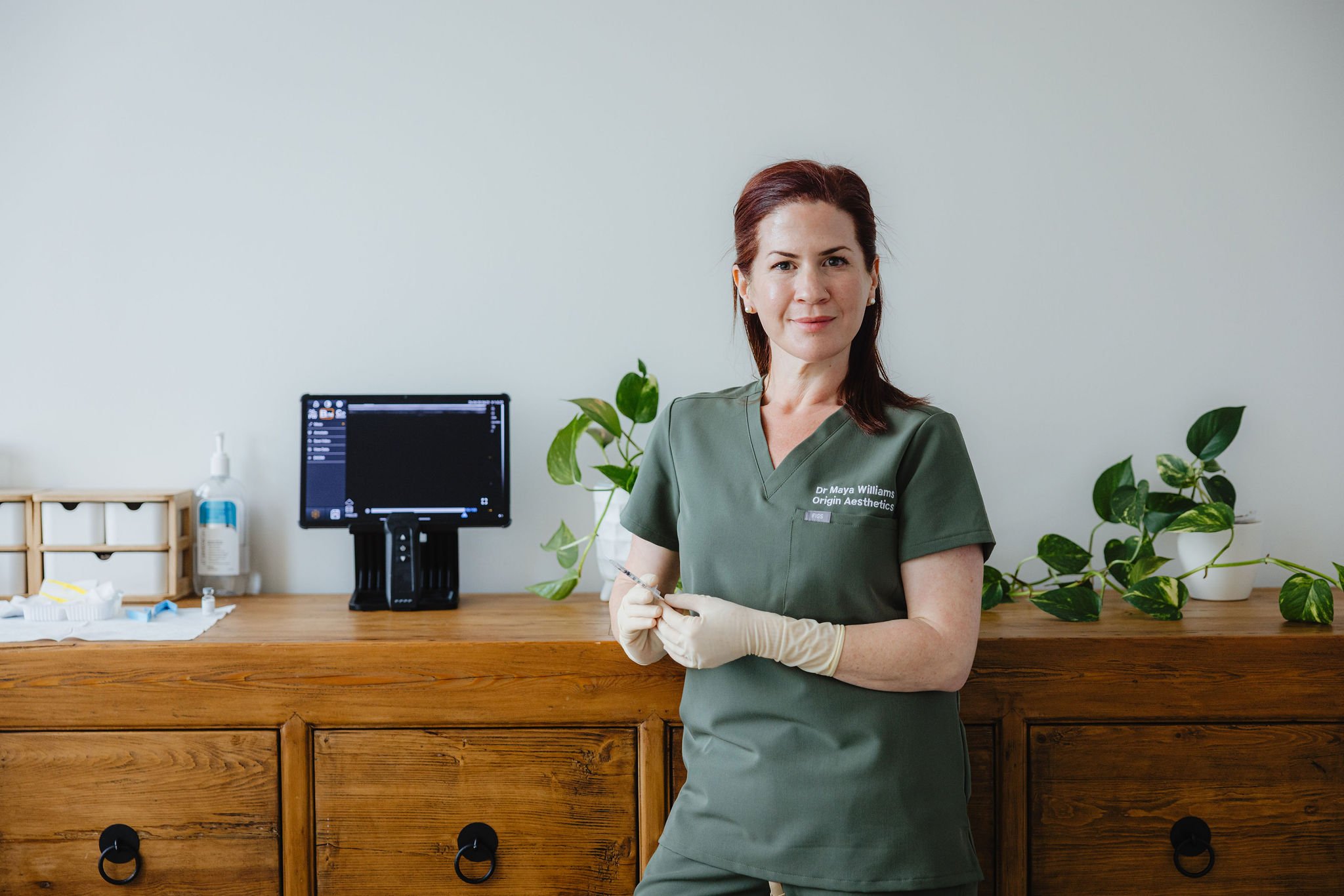
The idea for Origin Aesthetics did not arrive suddenly. It grew over years — in operating theatres, in private hospital corridors, and in quiet moments watching how skilled, carefully delivered aesthetic and reconstructive care could change the way people felt about themselves.
By the time I took the idea seriously, it felt less like a departure from anaesthesia and more like an extension of it.
The colleague who started it
For years I have worked alongside Dr Liz Insull, an oculoplastic surgeon, in private practice in Hawke's Bay. Watching her work gave me a front-row view of what aesthetic and reconstructive treatment can mean to a person — the confidence that returns, the way someone holds themselves differently. When Liz began her own postgraduate diploma in cosmetic medicine through NZSCM, it made me look more carefully at what medical aesthetics could be, and at what I might bring to it.
A particular kind of precision
I am a specialist anaesthetist, and within that I have spent a significant part of my career performing ophthalmic anaesthesia. Eye blocks.
If you haven't encountered them, ophthalmic nerve blocks involve placing a needle into a very small, anatomically complex space — in close proximity to the globe, the optic nerve, and structures that leave no margin for imprecision — on patients who are, understandably, often extremely anxious. Many people find any procedure near their eye deeply confronting. Some arrive terrified.
Over years of this work, I have developed something that goes beyond technical proficiency. It is a particular kind of clinical confidence — the ability to read a person's fear, to manage it carefully, to create enough trust and calm that they can get through something they didn't think they could. And then to execute the block with the precision the anatomy demands.
That combination — technical exactness and human attentiveness — is what ophthalmic anaesthesia has asked of me, repeatedly, for years. It is, I've come to realise, exactly what good aesthetic medicine asks for too.
The regional anaesthesia connection
My fellowship training was in regional anaesthesia. At its core, this is the craft of placing precise amounts of precisely chosen substances into precise locations in the human body — guided by ultrasound — to achieve a more controlled and considered result.
What I loved about that training wasn't the operating theatre setting. It was the discipline itself. The anatomy. The imaging. The needle. The moment when you know — from experience, from training, from sound and image and feel — that you've done it right.
Aesthetics, I came to realise, asks for the same things.
A clinical reason — not just a personal one
I came to cosmetic medicine through genuine intellectual curiosity about facial anatomy. The face is extraordinary: a structure shaped by bone, fat, muscle, and connective tissue, animated by dozens of muscles that evolved over millennia to communicate meaning without words. Studying it properly — the way a clinician studies anything — is humbling.
The more I learned, the more I understood what safe, effective aesthetic medicine actually requires. Not just a course on injection technique, but a thorough understanding of vascular anatomy, tissue planes, fascial layers, and the anatomical areas where inexperienced practice can cause real harm. This isn't said to frighten anyone. It is said because it matters — and because it is one of the reasons a specialist anaesthetist, with a deep, clinically grounded understanding of anatomy, is well placed to practise this medicine.
What ultrasound adds
When I began aesthetic training, I already had something many practitioners spend years trying to acquire: genuine comfort with ultrasound-guided procedures.
Ultrasound guidance in aesthetics is still relatively uncommon, and I understand why — it requires training, equipment, and the kind of spatial reasoning that only develops through regular practice. Being able to assess vascular structures before, during, or after selected treatments can add a valuable layer of clinical information. It is an important emerging safety tool in injectable medicine, and one that forms an important part of the Origin Aesthetics approach.
For me, reaching for the ultrasound probe feels entirely natural. It is what I do. It is what I trust.
The unexpected part: the joy of it
Here is what surprised me.
I expected to find aesthetics clinically interesting. I expected to feel competent. What I didn't fully anticipate was how much I would enjoy it — the creative dimension, the relationship with patients, the particular satisfaction that comes from looking at someone's face, understanding what they're asking for, and knowing you can help them get there without erasing who they are.
Good aesthetic medicine isn't about transformation. It's about restoration — bringing someone back to a version of themselves they recognise.
That requires a kind of listening I find genuinely meaningful. It requires understanding not just anatomy, but aspiration. Not just what the face is doing, but what the person wants to feel when they look in the mirror.
After years of watching what that looks and feels like in Liz's patients — and in the people I've helped through procedures they were frightened of — I find I understand it in my bones.
Why Hawke's Bay, why now
Hawke's Bay is home. I practise anaesthesia here, I live here, and I have real roots in this community. When I decided to establish Origin Aesthetics, it wasn't a business decision first — it was a decision to bring something I believed in to a place I care about.
There are excellent practitioners in this region, including nurse injectors I have genuine respect for. I see them as colleagues. What I bring is a different training background and a specific clinical skill set — ultrasound guidance, a deep understanding of facial anatomy, and the ability to manage the unexpected — that I hope adds something to the care available here.
What Origin Aesthetics is — and isn't
Origin Aesthetics is not a volume clinic. It's not a place where you'll be seen for fifteen minutes, handed a standard protocol, and ushered out. It is a boutique practice run by a specialist doctor, with the clinical rigour that implies.
I offer anti-wrinkle injections and dermal fillers, approached with careful assessment and anatomical respect. I use premium products. I take time.
I do not treat faces as templates.
If you've been curious about cosmetic medicine but felt uncertain about who to trust — that hesitation is worth listening to. Your instinct to ask questions, to understand what's being injected and by whom, and to expect a thorough consultation before any treatment: those instincts are correct. They're exactly what I'd want you to have.
I'd love to meet you. Come and ask the questions. That's what the consultation is for.
Ready to find out what's right for you?
Every treatment at Origin Aesthetics begins with an honest conversation. Book a consultation with Dr Williams and leave with a clear plan, or simply the reassurance that you don't need anything at all.